

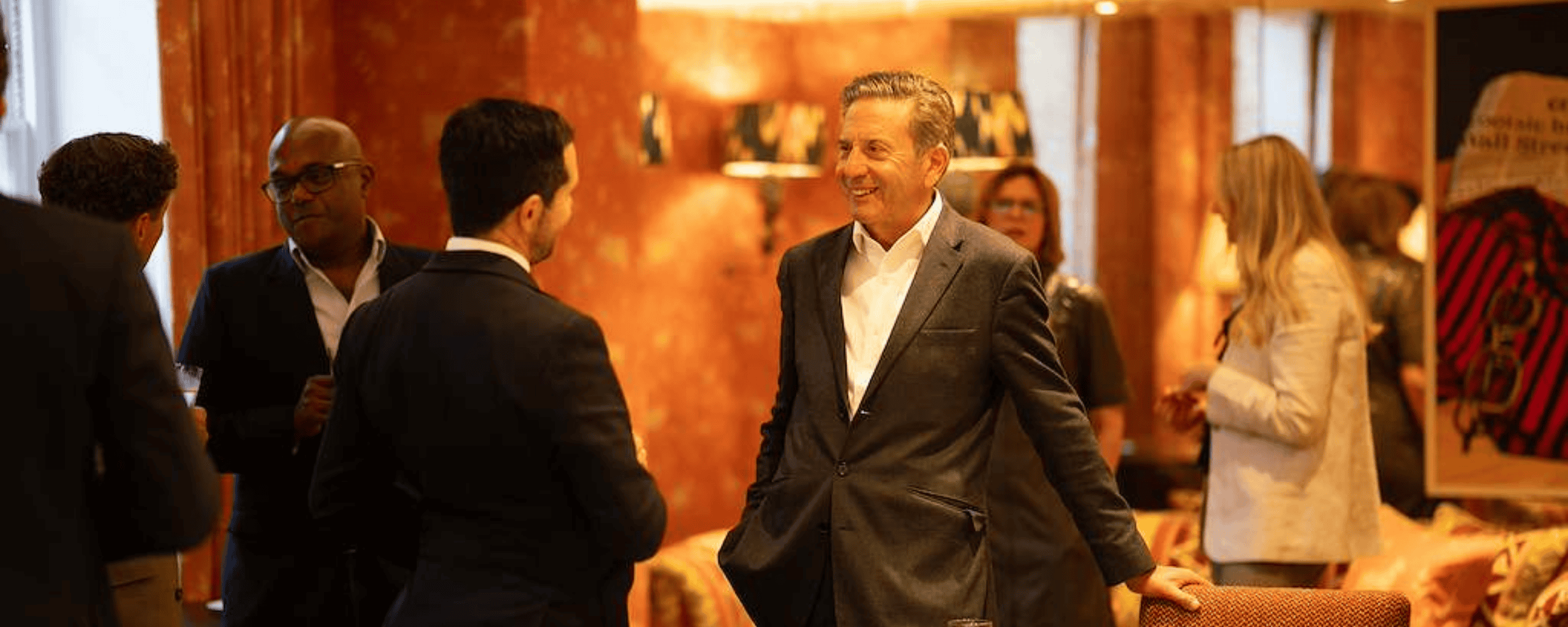
At London’s Haymarket Hotel, we welcomed our guests for a dinner to hear the views of Kenneth Cukier, Deputy Executive Editor at The Economist. An expert on AI and the co-author of the books Framers on mental models and AI and the bestseller Big Data, Cukier’s work explores why humans can do things that computers cannot. He discussed the meaning of authenticity in the age of AI, looking beyond the purely practical implications of an AI-dominated future to consider where the rationality of AI systems is found lacking. He spurred attendees to reflect on the intangible elements of the human intellect that data-driven systems like AI can never replace.
Cukier offered seven compact observations about AI, how it is changing society and what it means to be human.
The public mood toward AI is turning
Once greeted with excitement and optimism, AI now faces scepticism and anxiety. At university commencement ceremonies this Spring, speakers like Eric Schmidt, the former CEO of Google, were booed when they mentioned AI. It’s a tad ironic, Cukier quipped, considering the kids only graduated by dint of prompting ChatGPT to write their essays.
AI will soon be “always on”
People with a few strands of grey will remember when logging on to the internet meant hearing the squeal of modem for a dial-up connection – and how useful the Internet became when it was an “always on” experience, as it is today. AI is heading in the same direction: it will soon no longer be a discrete activity, but an integral part of everyday life, all the time
Unequal gains from AI will create new inequalities
Not everyone will benefit equally. AI is a superpower – many people may double their quality or output, while a few others leap ahead tenfold. The best adopters will leave the rest behind, creating new kinds of inequality based not intelligence, but on skills in using artificial intelligence, where the gains are amplified.
More, not necessarily better
New data shows that although AI is used to create more (be it text, computer code, etc), the output is not considered valuable: books no one reads, apps no one uses, etc. AI represents the “easy button” but at a cost: we risk flooding the world with mediocrity. Quantity will never be a problem; quality always will be. Yet progress depends on excellence. AI gives the median answer but invention relies on the new. Hence, does more AI mean less innovation?
AI is both superintelligent and stunted
AI exceeds human cognition by dint of processing more information, identifying intricate connections, having perfect memory and higher fidelity sensors than human senses. Yet it is stunted by its data. Ask ChatGPT to explain planetary motion before Copernicus, it would have noted Earth at the centre since that is what all the texts in its training set contained. It takes real people thinking afresh to reimagine what’s true beyond accepted beliefs.
AI is all logos; humans have mythos as well
AI’s statistical approach marks the apex of rationality, but it is devoid of the symbolic and sense of meaning. AI is all “logos” (explicit, logic) without “mythos” (timeless, truth). Humans act with both – what the religious writer C.S. Lewis referred to as “sentiments” in “chests” (as opposed to appetites in the belly and intellect in the head). AI lacks this.
Humans plus technology: the stethoscope as metaphor
Few doctors need stethoscopes. Today they are worn as a symbol of the profession. But they also give license to touch the patient. The “hand of the carer” is important, doctors explain; information is transmitted through touch. Likewise in the AI age, we need to use technology but retain the human element, to interact with real things, not just abstractions via a screen.
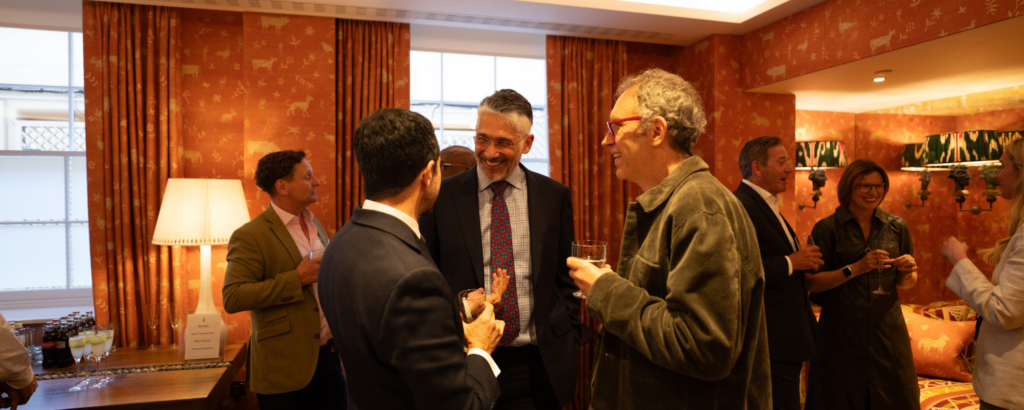
The remarks sparked a spirited conversation, as guests built on the themes from their experiences, whether it was running government units based on cognitive science to building inexpensive violins for poor children around the world. Cukier’s overriding message was clear: AI is a powerful tool, but it is not a substitute for being human. It can boost our abilities, but how it evolves depends on our judgement, creativity and human connection.